

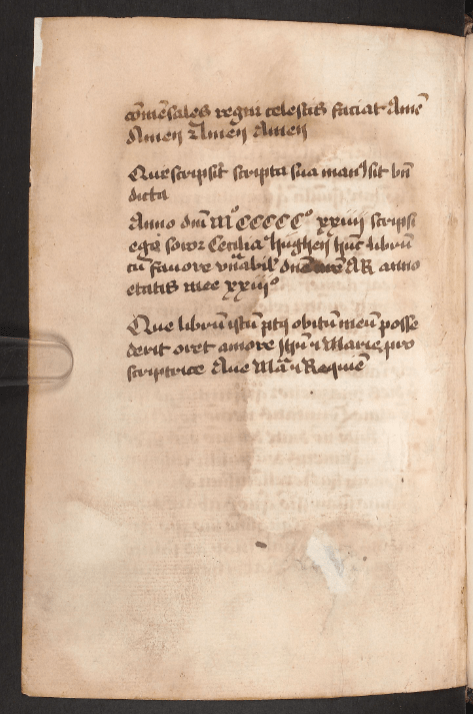
While many of us today spend Holy Saturday on last-minute preparations before Easter, the nuns of late medieval Buxtehude observed the day very differently. For them, it was not a pause between Good Friday and Easter Sunday, but a liturgically dense and spiritually charged time of prayer, ritual, and anticipation. One of the most remarkable witnesses to this world is the Easter prayer book written in 1524 by the Buxtehude nun and later prioress Cecilia Hüge, now preserved as Stuttgart, Württembergische Landesbibliothek, Cod. brev. 22.
This small-format Latin–Low German manuscript comprises 420 paper leaves and is, as far as current evidence allows, the only prayer book that can be securely linked to Neukloster Buxtehude through its own colophon. On fol. 419v, Cecilia identifies herself as the scribe, records that she wrote the manuscript in 1524 at the age of twenty-three, and asks future readers to pray for her after her death. The manuscript offers unusually direct access to the devotional life of a northern German women’s convent in the early sixteenth century and therefore deserves closer attention.
What complicates this enterprise is that Cecilia’s prayer book belongs to a type of devotional manuscript that has so far received relatively little scholarly attention: the Orationale.The term is not sharply defined in scholarship; it has hence been used for somewhat different types of prayer books. The term is sometimes used for loose collections of prayers for a variety of purposes. This, however, is precisely not the kind of prayer book to which Cecilia’s manuscript belongs.
In this post and the ones that follow, I use the term to refer to a type of manuscript that is neither a formal service book nor simply a collection of private prayers. Orationalia combine elements of the Latin liturgy with prayers, meditations, translations, and devotional expansions in both Latin and Low German. They stand between communal liturgy and personal devotion, between Latin and the vernacular, and between public ritual and inward prayer. Precisely because of this in-between status, they are especially valuable for showing how nuns engaged with the liturgy beyond its formal performance in choir.
To understand more fully how Cecilia’s Easter prayer book functioned, it is useful to place it alongside the much larger and better studied corpus of prayer books from the Cistercian convent of Medingen near Celle. More than sixty-five prayer books are now known from Medingen, most of them written and illuminated by the nuns themselves. Together they document around 150 years of active book production, from the early fifteenth to the mid-sixteenth century.
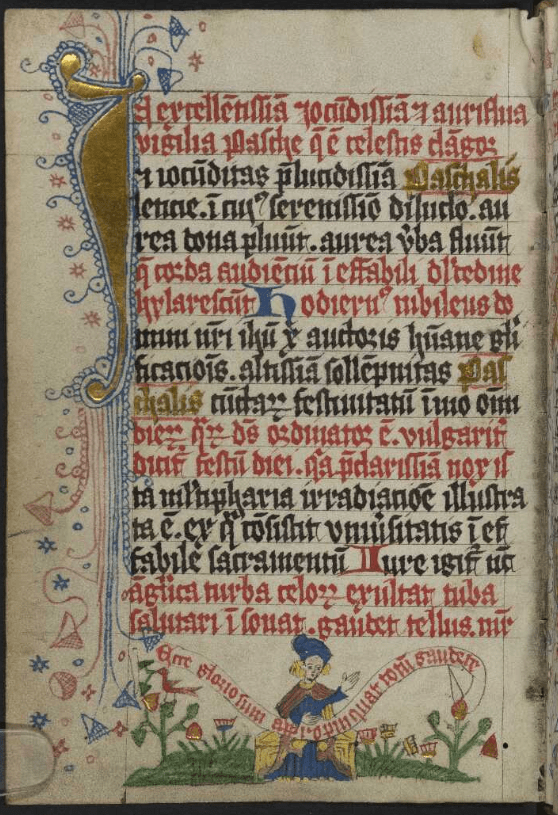
Most of the surviving Medingen manuscripts belong to the category of Orationalia and are structured around a particular liturgical season, especially Easter, Christmas, or the Passion. Among them, the Easter prayer book now in the Dombibliothek Hildesheim (Ms. J 29), written in 1478 by the Medingen nun Winheid of Winsen, is one of the best understood examples (Fig. 2). In what follows, I use Winheid’s prayer book as a point of comparison for Cecilia’s devotional manuscript, because it offers a particularly clear guide to the structure and devotional logic of this type of book.
Like Winheid’s prayer book from Medingen, Cecilia’s devotional manuscript is organised around the Easter season. It begins with Holy Saturday and Easter Sunday, continues through Easter Week, and concludes with the Sundays after Easter. Other Easter Orationalia follow a similar structure, which suggests that this may have been a recurring pattern within a larger textual community that has not yet been fully investigated. Cecilia’s prayer book offers many sections worthy of closer attention, but given the season, this post focuses on the opening part of the manuscript: Holy Saturday, and more precisely the Easter Vigil.
A brief explanation may be useful here. The Easter Vigil was one of the principal services of Easter: the first liturgical celebration of Christ’s Resurrection. In theory, it belonged to the night between Holy Saturday and Easter Sunday, beginning after dark and ending before dawn. In medieval practice, however, there was a growing tendency to celebrate it earlier on Holy Saturday. Even so, the service retained its character as a threshold liturgy, poised between burial and resurrection, darkness and light.
The opening of Cecilia’s prayer book is both visually and rhetorically ambitious (Fig. 3). A striking full-page initial immediately marks the feast as exceptional and places the reader in the liturgical setting of Holy Saturday and the Easter Vigil. The opening rubric sets the tone: the Vigil is introduced as the “most glorious and splendid gold-flowing Easter Vigil,” while the day itself is described as a day of “rest, mercy, consolation, and hope.” Even for a reader unfamiliar with medieval liturgy, the manuscript makes one thing clear from the outset: this is a feast of exceptional dignity and incomprehensible joy.
Like other Easter Orationalia, Cecilia’s devotional manuscript combines elements of the Latin liturgy with texts for personal devotion in both Latin and Middle Low German. This rich mixture of different kinds of material can make it difficult to identify and reconstruct the individual steps of the liturgy, in this case those of Holy Saturday and more precisely Easter Vigil. Yet precisely this difficulty makes the manuscript so rewarding to study. It offers a rare glimpse into the celebration of the most important feast of the medieval calendar within a women’s convent, while also showing how the nuns creatively adapted liturgical material in order to shape their own devotional practice and their spiritual identity as brides of Christ.
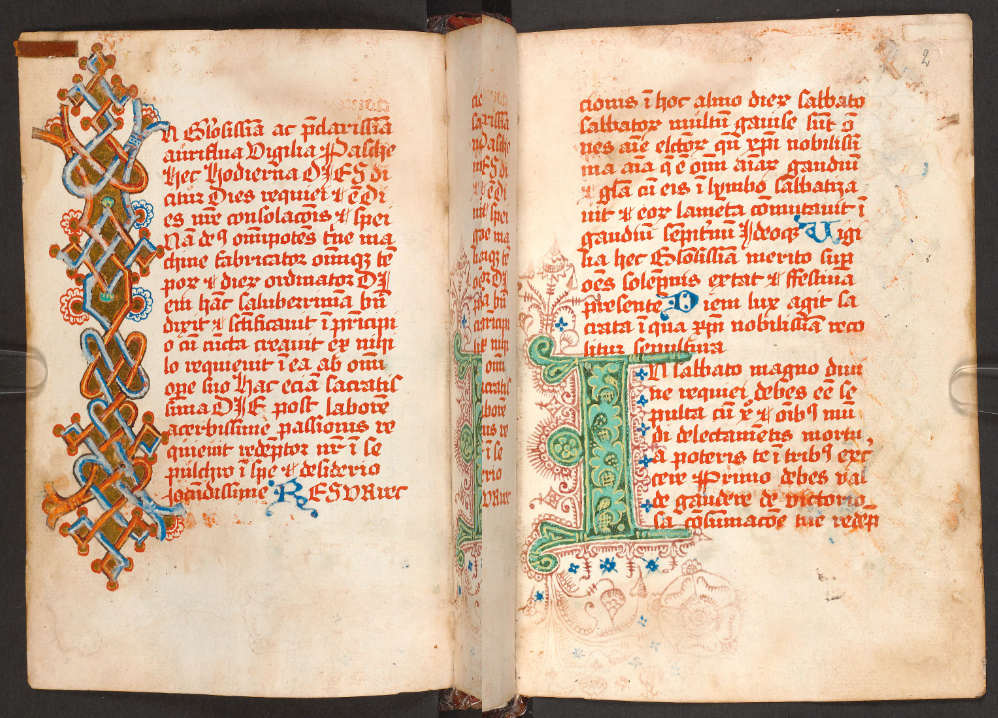
What complicates matters is that Cecilia’s prayer book omits many of the rubrics that would make the liturgical sequence easier to follow. This is where Winheid’s manuscript becomes especially helpful. Its Holy Saturday section is laid out with unusual clarity: introduction, chapter meditation, prayer to Mary, the rites preceding the Vigil Mass — including the consecration of the fire, the blessing of the candle, and the Exsultet (Fig. 4) — followed by a meditation on the reading from Genesis, the consecration of the font, and finally the Vigil Mass itself. This does not mean that Cecilia’s book simply reproduces Winheid’s. Rather, Winheid’s prayer book provides a useful point of comparison, helping us to recognise the liturgical framework that Cecilia’s more compact devotional presentation appears to presuppose.
Cecilia’s prayer book opens with a sequence of prayers and meditations centred on the Holy Sepulchre, dwelling on the interval in which Christ rests in the tomb after the Passion and before the Resurrection (fols. 1v–15r). This captures one of the defining moods of Holy Saturday in the manuscript: not empty waiting, but an intense and affective attentiveness to Christ’s burial.
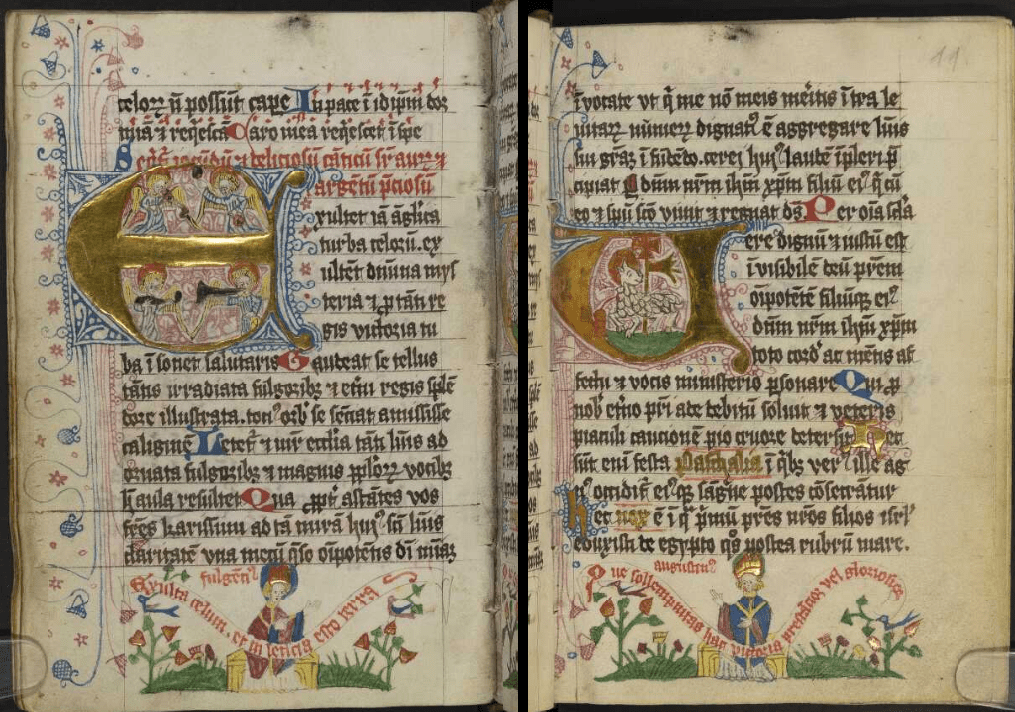
The manuscript then turns to the rites leading into the Easter Vigil proper. The blessing of the new fire is accompanied by a meditation based on the Easter hymn Inventor rutili (fols. 15r–17v), while the blessing of the paschal candle is framed by an extended version of the Exsultet (fols. 16v–24r). In the Buxtehude manuscript, the importance of this proclamation is underscored visually by an angelic choir in the margins (Fig. 5). This is very much in line with the broader tradition visible in Winheid’s prayer book, where the Exsultet likewise forms a centrepiece of the whole section and receives especially rich visual and textual emphasis (see Fig. 4 above). That prominence is fitting, since the Exsultet is the great proclamation of Easter light: the chant that announces Christ’s victory in a language of fire, candlelight, joy, and cosmic renewal. In manuscripts such as these, the Exsultet was not only something sung in the liturgy, but also something to be revisited in prayer and meditation.
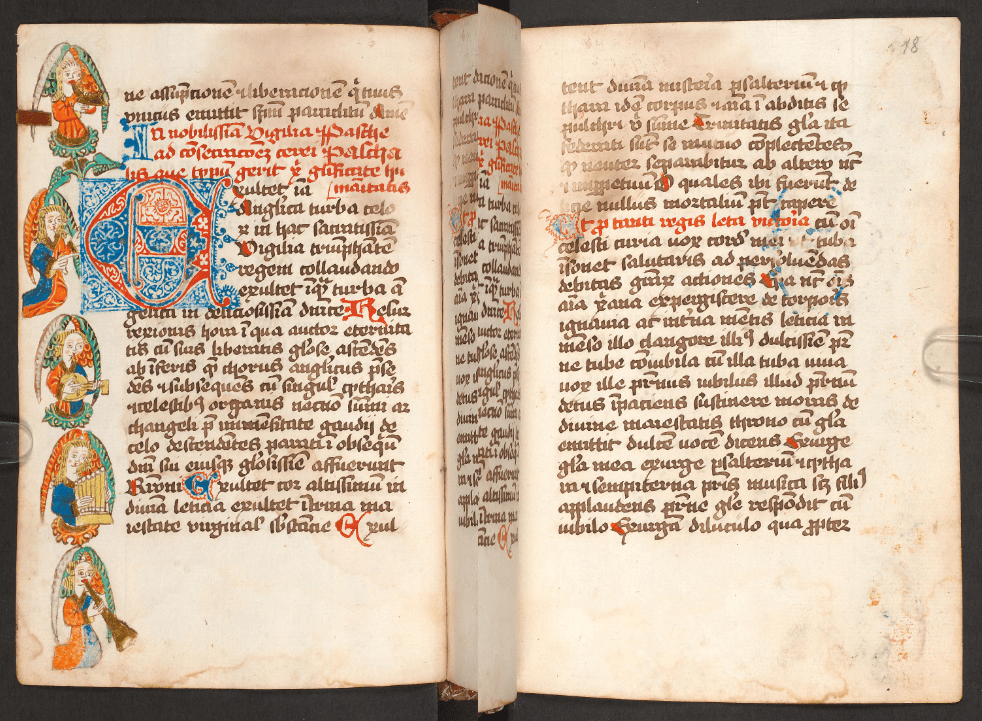
Cecilia’s manuscript then continues with further prayers and meditations for the Vigil (fols. 24v–27v), followed by the Resurrection psalms 29 and 3 (fols. 27v–33v). These may have accompanied the part of the service that modern liturgy calls the Liturgy of the Word, that is, the sequence of biblical readings and their responses. In Winheid’s prayer book, the corresponding section is easier to identify, since it includes a meditation on the reading from Genesis.
At this point, however, Cecilia’s manuscript becomes difficult to interpret with confidence because at least one leaf is missing; the torn edge is still visible in the digital facsimile (Fig. 6). It therefore remains uncertain whether texts for the consecration of the font once stood here as well. The surviving text then resumes with further meditations on the Holy Sepulchre, including a prayer associated with Christ’s rosy flesh or body. Here, it seems, the preparatory part of the Easter Vigil comes to an end.
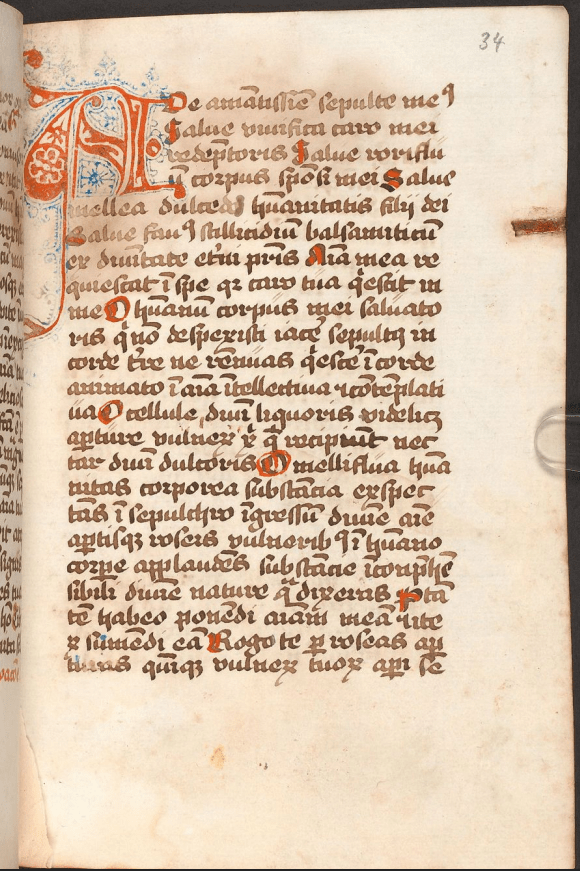
Figure 6: Stuttgart, Württembergische Landesbibliothek, Cod. brev. 22, fol. 34r.
The texts for the Vigil Mass follow next. In medieval Easter liturgy, the Mass formed the climax of Holy Saturday, following the readings and, where included, the baptismal rites. Winheid’s Medingen prayer book makes this sequence especially clear: after the rites preceding the Mass, it moves through the Kyrie, Gloria, Prefatory Prayer, and Canon, before concluding with a prayer to Mary and the beginning of Vespers. Cecilia’s manuscript is less explicit, but the same broad progression can still be recognised. Instead of dense rubrics, Cecilia’s book often relies on visual cues such as large initials to mark shifts within the ritual.
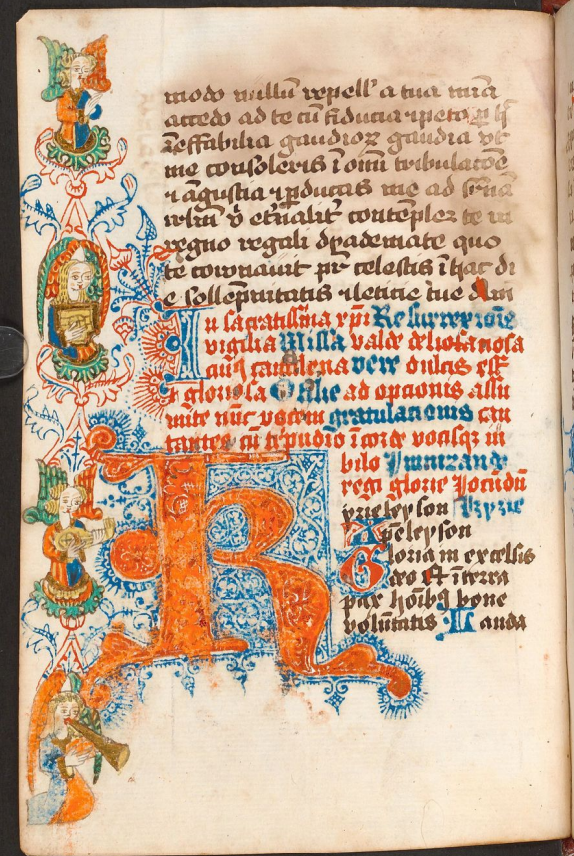
Figure 7: Stuttgart, Württembergische Landesbibliothek, Cod. brev. 22, fol. 35v.
A particularly striking example is the opening of the Kyrie (Fig. 7; fols. 35v), one of the first sung parts of the Mass. Here the page is dominated by a large red initial with blue penwork, while an angelic choir appears once again in the margins. The text urges the reader to take up the voice of jubilation and to sing the joyful Kyrie to the King of Glory. The effect is typical of the book as a whole. It does not simply note that the choir is now singing the Kyrie; it transforms that moment into an invitation to join inwardly in the praise.
The Kyrie is followed by a further series of prayers and meditations, including one in Middle Low German (fols. 36v–37r), the Preface (fols. 38r–39r), the Canon missae (fols. 43v-47r), marked by a large penwork initial, and additional devotional texts leading up to Vespers. Of particular interest is the Middle Low German prayer assigned to the moment when the choir sings the alleluia (Fig 8).
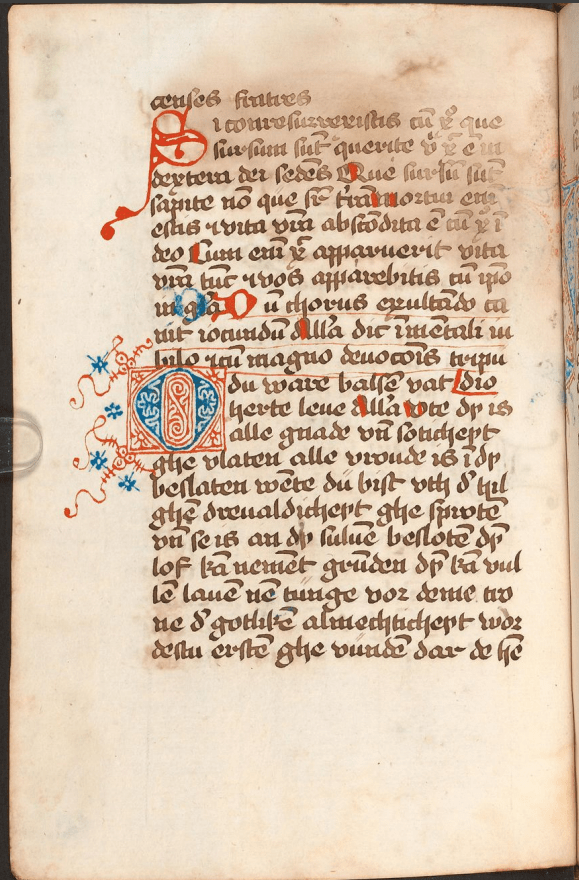
Here the manuscript makes explicit what is often only implied elsewhere: the communal liturgical chant of the convent is to be answered by the nun’s own inward prayer. Christ is praised in richly affective language as the true vessel of balsam, full of grace, sweetness, and joy, proceeding from the Holy Trinity and surpassing the power of any human tongue fully to praise him. The prayer ends by drawing the speaker into that praise “with heart and mouth … in this joyful hour”. This is one of the clearest examples of what an Orationale does: it turns public rite into personal devotion.
From here the manuscript moves on to the later offices of Easter. Vespers is relatively brief (fols. 58r-59v), and it is followed by further texts connected with the Holy Sepulchre (fols. 53r-71r), with Compline (fols. 71r-87r), and finally with the Hour of the Resurrection (fols. 87v-110v).
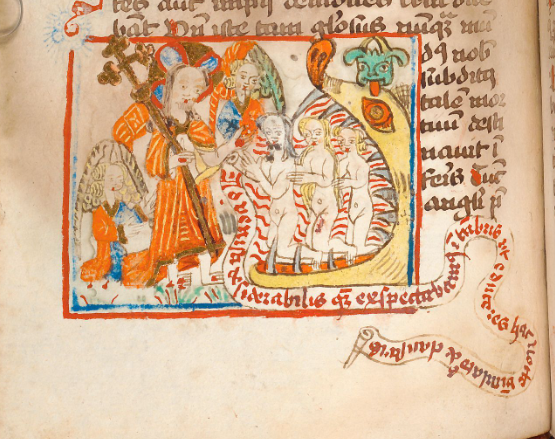
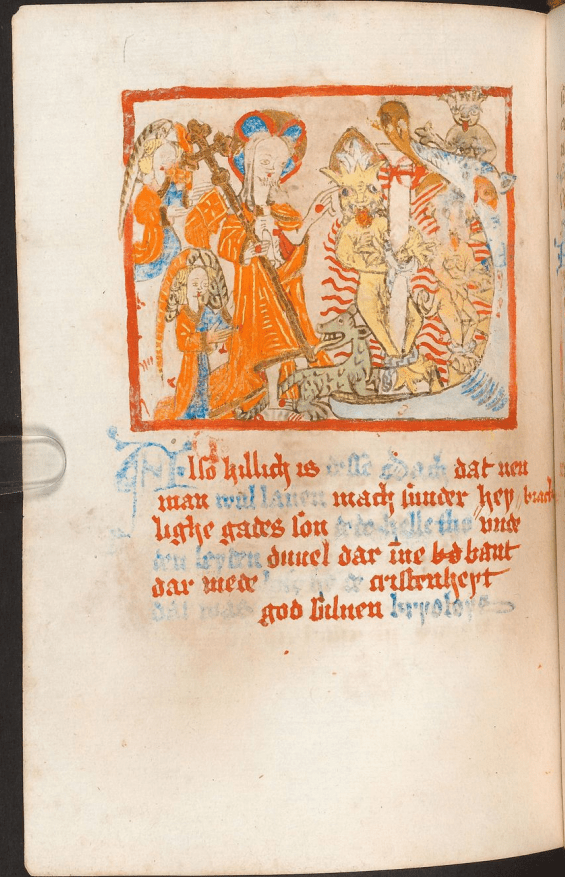
At that point, the visual programme becomes even more ambitious. The section opens with a large penwork initial and includes the manuscript’s first miniatures (fol. 77v; Fig. 9), among them scenes of the Anastasis — Christ’s descent to the underworld and the liberation of the righteous dead — and the defeat of the devil (Fig. 10).
This, perhaps, is the most revealing feature of Cecilia’s Easter prayer book. It does not merely record the liturgy from the outside. Instead, it translates liturgical action into a sequence of inner responses: expectation, wonder, grief, joy, praise, and identification. The soul is prepared for the blessing of the fire, the candle is interpreted symbolically, the chants are answered in prayer, and the movements of the liturgy are prolonged in meditative reading. That is precisely what makes Cecilia’s manuscript so valuable. It shows how a nun could inhabit the Easter Vigil both as a member of the convent choir and as an individual praying reader.
The Buxtehude manuscript should therefore be read not simply as a local curiosity, but as part of a wider network of late medieval women’s liturgical culture in northern Germany. Comparison with Winheid’s Easter prayer book from the Cistercian convent of Medingen already reveals both important similarities and striking differences. In both manuscripts, the Easter Vigil is not treated merely as a sequence of liturgical actions, but as a devotional space shaped by prayer, meditation, visual display, and affective participation. Both books rework the formal liturgy into a form that allows the individual nun to engage it inwardly, and both show how closely communal worship and personal devotion could be intertwined. At the same time, Cecilia’s manuscript is often less explicitly structured than Winheid’s, with fewer rubrics and a different balance between liturgical guidance and meditative expansion.
These differences are significant, but they are not yet fully understood. Much more work remains to be done on the liturgical sequence of Cecilia’s prayer book itself before a fuller comparison with the Medingen corpus becomes possible. Only then will it be possible to assess more precisely what is distinctive about the devotional profile of Neukloster Buxtehude, and what it shares with other women’s convents in the region. Precisely for that reason, Cecilia’s Easter prayer book is so valuable: it preserves not only texts for Holy Saturday and the Easter season, but also a rare opportunity to trace both the common culture and the local particularities of late medieval female devotion in northern Germany.
Selected bibliography
Bärsch, Jürgen. Die Feier des Osterfestkreises im Stift Essen nach dem Zeugnis des Liber Ordinarius: Ein Beitrag zur Liturgiegeschichte der deutschen Ortskirchen. Quellen und Studien 6. Münster: Aschendorff, 1997.
Cyrus, Cynthia J. The Scribes for Women’s Convents in Late Medieval Germany. Toronto: University of Toronto Press, 2009.
Hascher-Burger, Ulrike, and Henrike Lähnemann. Liturgie und Reform im Kloster Medingen: Edition und Untersuchung des Propst-Handbuchs Oxford, Bodleian Library, MS. Lat. liturg. e. 18. In collaboration with Beate Braun-Niehr. Spätmittelalter, Humanismus, Reformation 76. Tübingen: Mohr Siebeck, 2013.
Heffernan, Thomas J., and E. Ann Matter, eds. The Liturgy of the Medieval Church. Kalamazoo, MI: Medieval Institute Publications, 2005.
Jones, Claire Taylor. Ruling the Spirit: Women, Liturgy, and Dominican Reform in Late Medieval Germany. Philadelphia: University of Pennsylvania Press, 2017.
Lähnemann, Henrike. “From Devotional Aids to Antiquarian Objects: The Prayer Books of Medingen.” In Reading Books and Prints as Cultural Objects, edited by Evanghelia Stead, 33–55. New Directions in Book History. Cham: Palgrave Macmillan, 2018.
Lähnemann, Henrike. “The Materiality of Medieval Manuscripts.” Oxford German Studies 45, no. 2 (2016): 121–141.


Leave a Reply