

From 1 to 3 July 2026, I had the pleasure of taking part in the conference “Bound for Devotion: The Prayer Book as Object and Practice, 1300–1800” at Leiden University Library. The conference was hosted by the ERC project Pages of Prayer: The Ecosystem of Vernacular Prayer Books in the Late Medieval Low Countries, c. 1380–1550 [PRAYER] and organised by Anna Dlabacova, Lieke Smits, and Irene Van Eldere.
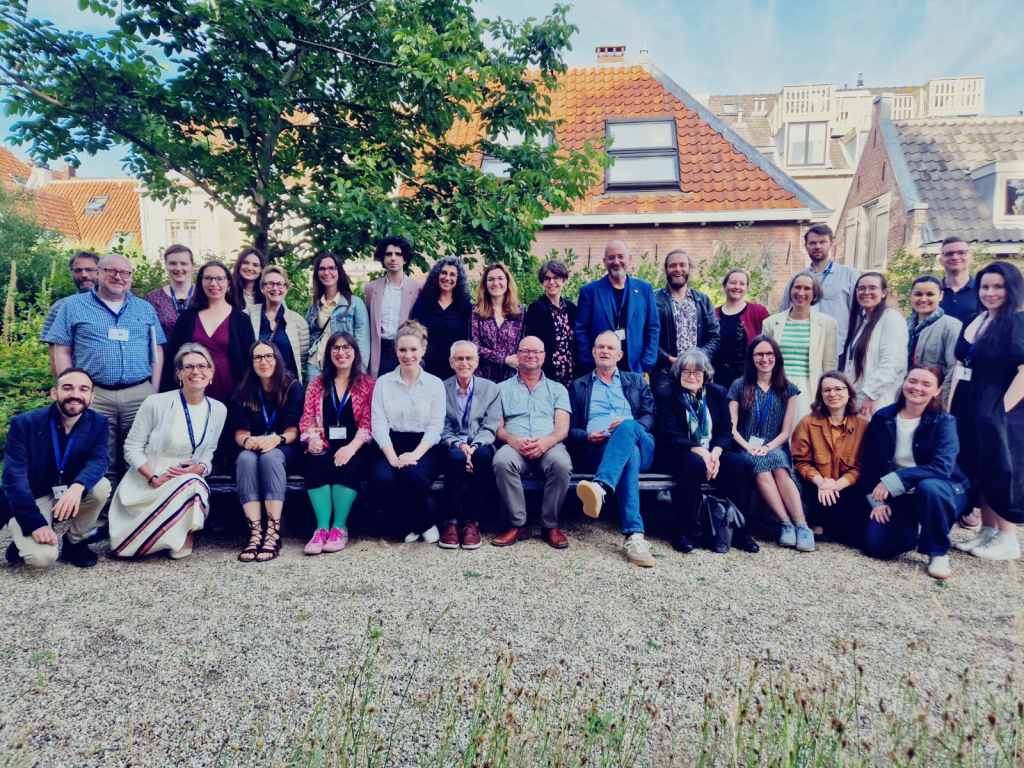
It was a wonderfully inspiring event, bringing together scholars working on prayer books not only as texts, but as material, visual, devotional, and performative objects. Across three days, the papers and discussions explored how prayer books shaped religious practice: how they were held, read, touched, sung from, looked at, carried, exchanged, and remembered.
I presented a paper entitled “Cradling Christ: Illuminated Prayer Books from the Benedictine Convent of Neukloster Buxtehude.” My paper focused on a remarkable Christmas prayer book now preserved in Cincinnati. On one of its pages, a crowned nun stands at the foot of a cradle and rocks the Christ Child, surrounded by angels and scrolls of song. I argued that this image does more than illustrate devotion: it invites the reader to enter into devotional action. The manuscript becomes a space in which seeing, reading, singing, remembering, and imagining come together.
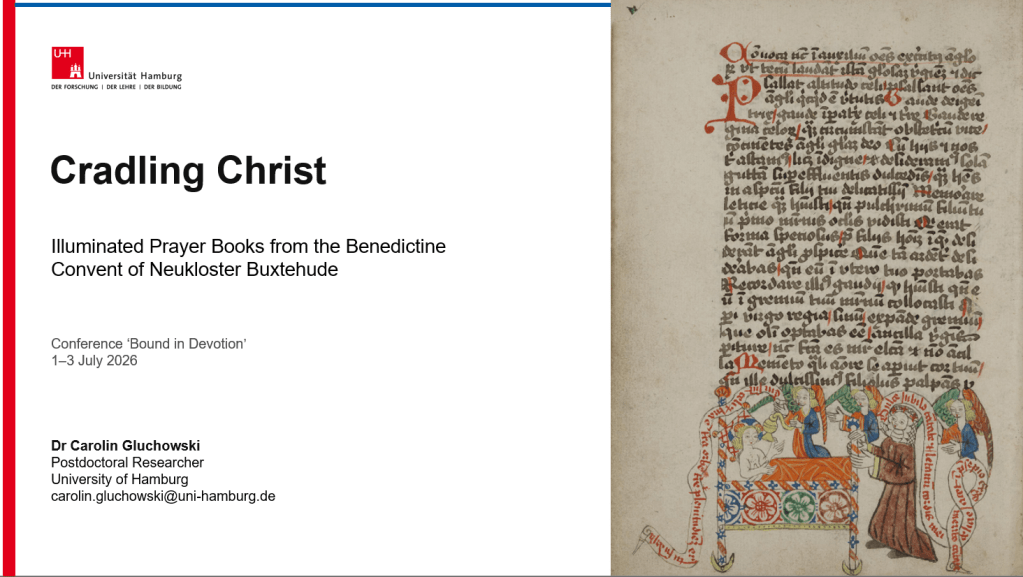
This paper also formed part of my broader work on the emerging corpus of manuscripts from Neukloster Buxtehude. Until recently, this convent’s prayer books have remained much less visible than those of better-known North German women’s houses such as Medingen. Yet the surviving manuscripts from Neukloster reveal a rich culture of Latin and Low German prayer, female scribal work, image-making, and embodied devotion.
The Leiden conference offered a wonderful opportunity to place the Buxtehude manuscripts in conversation with other late medieval and early modern prayer books from across Europe. It left me with many new ideas about how we might understand prayer books as objects that do not merely preserve devotion, but actively help to perform it.


Leave a Reply